Dt. Gauri Mehra
Published on July 27, 2026
High-Protein Indian Diet for Muscle Building
High-Protein Indian Diet for Muscle Building
Building muscle requires more than just lifting weights—it also depends on proper nutrition. While regular strength training stimulates muscle growth, consuming enough protein provides the building blocks your muscles need to recover and grow stronger. Many people believe muscle-building diets rely heavily on expensive supplements, but a well-planned high-protein Indian diet for muscle building can provide all the essential nutrients using everyday foods.
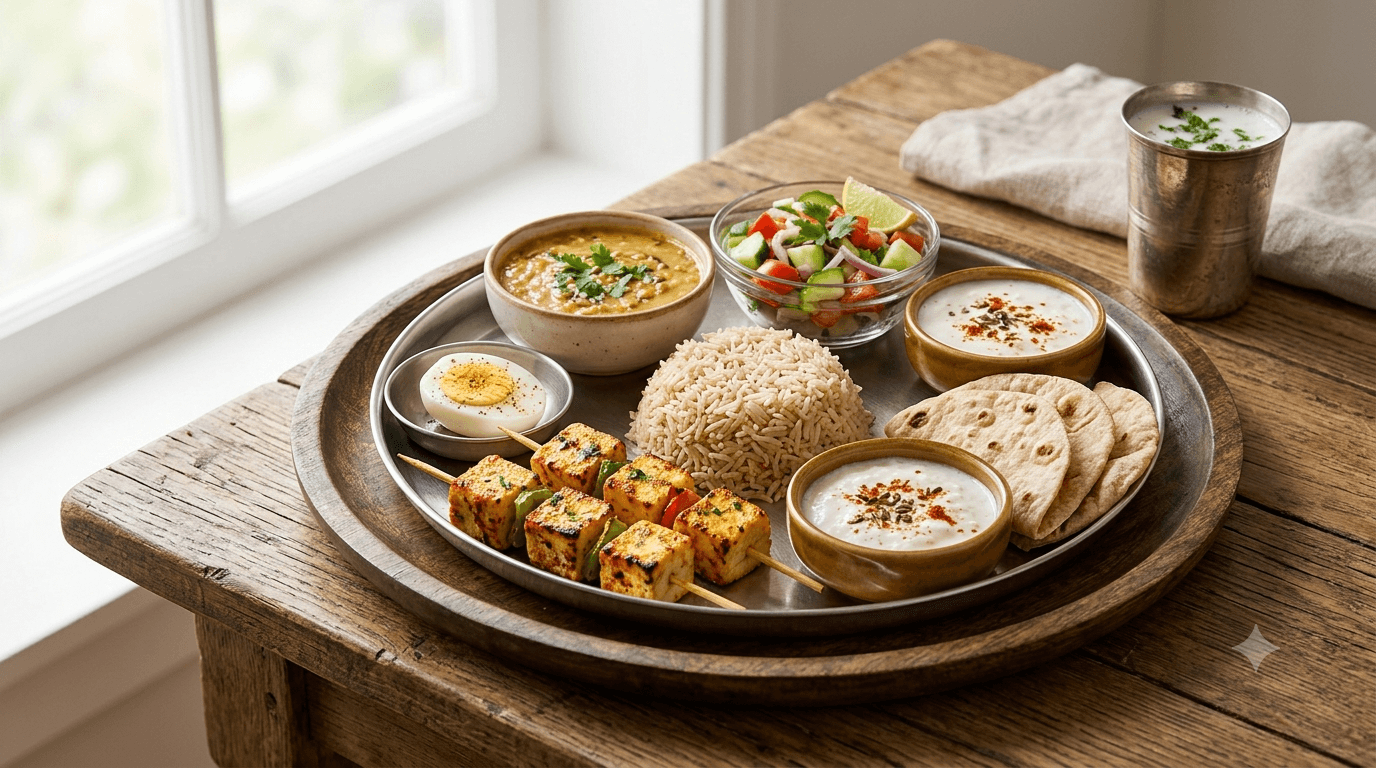
Indian cuisine offers a wide variety of protein-rich options, whether you follow a vegetarian, non-vegetarian, or mixed diet. Foods such as paneer, lentils, soy products, eggs, chicken, fish, milk, and legumes can help you meet your daily protein requirements while also supplying carbohydrates, healthy fats, vitamins, and minerals.
This blog explores the importance of protein, the best Indian protein-rich foods, meal planning tips, and dietary strategies to support muscle growth naturally.
Why Is Protein Important for Muscle Building?
Protein is made up of amino acids, which are essential for repairing and building muscle tissue after exercise. During strength training, muscle fibers experience microscopic damage. Consuming adequate protein helps repair these fibers, making them stronger and larger over time.
In addition to muscle growth, protein also helps:
- Speed up recovery after workouts
- Preserve lean muscle during weight loss
- Improve strength and performance
- Support healthy bones
- Enhance satiety and appetite control
- Boost metabolism
Without sufficient protein, muscle recovery slows down, making it difficult to achieve fitness goals.
How Much Protein Do You Need?
Protein requirements vary depending on age, body weight, activity level, and fitness goals.
General recommendations include:
- Sedentary adults: 0.8 g of protein per kg of body weight
- Recreational exercisers: 1.0–1.2 g/kg
- People doing regular strength training: 1.6–2.2 g/kg
- Athletes in intense training: Up to 2.2 g/kg, depending on individual needs
For example, a person weighing 70 kg aiming to build muscle may need 112–154 grams of protein per day.
A sports nutritionist or dietitian can help determine the right intake based on your goals.
Best High-Protein Indian Foods
Dairy Products
Dairy is an excellent source of complete protein.
Good choices include:
- Paneer
- Greek yogurt
- Milk
- Curd
- Cheese (in moderation)
These foods are also rich in calcium, which supports bone health.
Eggs
Eggs are among the highest-quality protein sources because they contain all essential amino acids.
Benefits include:
- High biological value
- Rich in vitamin B12
- Supports muscle recovery
- Easy to prepare
Chicken
Skinless chicken breast is one of the leanest protein options.
It provides:
- High-quality protein
- Low saturated fat
- Iron
- Vitamin B6
- Niacin
Fish
Fish such as salmon, tuna, rohu, and mackerel provide protein along with heart-healthy omega-3 fatty acids.
Benefits include:
- Muscle recovery
- Reduced inflammation
- Better heart health
Lentils and Pulses
Indian dals are excellent plant-based protein sources.
Examples include:
- Moong dal
- Masoor dal
- Toor dal
- Urad dal
- Chana dal
Pairing dals with rice or whole grains improves the overall amino acid profile.
Soy Products
Soy is one of the few plant proteins that provides all essential amino acids.
Healthy options include:
- Soy chunks
- Tofu
- Soy milk
- Edamame
Soy products are especially useful for vegetarians and vegans.
Chickpeas and Beans
Include foods such as:
- Chickpeas (Chole)
- Rajma
- Black beans
- White beans
- Green peas
These foods also provide fiber, iron, and complex carbohydrates.
Nuts and Seeds
Although not extremely high in protein, nuts and seeds contribute healthy fats and additional protein.
Examples include:
- Almonds
- Peanuts
- Walnuts
- Pumpkin seeds
- Chia seeds
- Flaxseeds
- Sunflower seeds
Sample High-Protein Indian Meal Plan
Early Morning
- Warm water
- Handful of soaked almonds
- One banana
Breakfast
- Vegetable paneer bhurji
- Two whole wheat rotis or oats
- One glass of milk
Approximate protein: 25–30 g
Mid-Morning Snack
- Greek yogurt with seeds
- Seasonal fruit
Approximate protein: 15–20 g
Lunch
- Grilled chicken or paneer
- Brown rice or whole wheat chapati
- Mixed dal
- Salad
- Curd
Approximate protein: 35–40 g
Evening Snack
- Roasted chana
- Sprouts salad
- Buttermilk
Approximate protein: 15–20 g
Post-Workout
- Milk or a protein-rich smoothie
- Boiled eggs or tofu
Approximate protein: 20–30 g
Dinner
- Grilled fish, chicken, tofu, or paneer
- Mixed vegetables
- Chapati or quinoa
Approximate protein: 30–35 g
Bedtime
- Glass of milk or Greek yogurt
Approximate protein: 10–15 g
Protein Timing Matters
Distributing protein intake evenly throughout the day supports muscle protein synthesis more effectively than consuming most of it in one meal.
Aim to include a good source of protein in every meal and snack.
After resistance training, eating a protein-rich meal within a couple of hours can help optimize recovery.
Importance of Carbohydrates
Protein alone is not enough for muscle growth.
Healthy carbohydrates provide energy for workouts and replenish glycogen stores.
Good Indian carbohydrate sources include:
- Brown rice
- Whole wheat chapati
- Oats
- Millets
- Sweet potatoes
- Fruits
- Quinoa
Combining carbohydrates with protein enhances recovery after exercise.
Healthy Fats Support Muscle Growth
Healthy fats help maintain hormone production, including testosterone, which plays a role in muscle development.
Include:
- Avocados
- Olive oil
- Nuts
- Seeds
- Fatty fish
Avoid excessive intake of fried and processed foods.
Stay Hydrated
Water plays an important role in:
- Nutrient transport
- Muscle function
- Temperature regulation
- Recovery
Drink enough water throughout the day, especially before, during, and after workouts.
Should You Take Protein Supplements?
Many people can meet their protein needs through food alone.
However, protein supplements may be useful for individuals who:
- Have higher protein requirements
- Struggle to meet daily intake through diet
- Need a convenient post-workout option
Protein powders should complement a balanced diet, not replace whole foods. Consult a healthcare professional or registered dietitian before starting supplements.
Common Mistakes to Avoid
Avoid these common muscle-building nutrition mistakes:
- Skipping meals
- Eating too little protein
- Ignoring carbohydrates
- Not consuming enough calories
- Poor hydration
- Inconsistent meal timing
- Relying only on supplements
- Lack of sleep and recovery
Consistency in training, nutrition, and rest is key to long-term progress.
Lifestyle Tips for Muscle Building
To maximize muscle growth:
- Follow a structured strength training program.
- Sleep 7–9 hours each night.
- Eat enough calories to support your activity level.
- Include protein in every meal.
- Progressively increase workout intensity.
- Allow muscles adequate recovery time.
- Limit alcohol and ultra-processed foods.
Conclusion
A high-protein Indian diet for muscle building can be both nutritious and delicious. Whether you are vegetarian or non-vegetarian, there are plenty of affordable, protein-rich foods that support muscle growth, improve recovery, and enhance overall fitness. By combining adequate protein intake with balanced carbohydrates, healthy fats, regular strength training, proper hydration, and sufficient rest, you can build lean muscle effectively without relying solely on supplements.
For personalized guidance, consult a registered dietitian or sports nutrition expert who can create a meal plan tailored to your body weight, activity level, and fitness goals.