Dt. Gauri Mehra
Published on September 11, 2026
Nutrition During Pregnancy: Essential Nutrients for Mother and Baby
Nutrition During Pregnancy: Essential Nutrients for Mother and Baby
Pregnancy is a time when your body needs extra nutritional support. The food you eat provides energy for you while also supplying the nutrients your baby needs for growth and development. But eating well during pregnancy is not simply about eating more. It is about getting enough of the right nutrients from a varied and balanced diet.
Some nutrients become particularly important during pregnancy because the body's requirements increase. Folic acid supports early development, iron helps meet the body's increased blood needs, while calcium, iodine, protein and other nutrients contribute to the baby's growth.
Understanding these essential nutrients can help you make better food choices throughout pregnancy.
Why Does Nutrition Matter During Pregnancy?
During pregnancy, your body goes through significant changes. Blood volume increases, tissues develop, and the baby grows from a few cells into a fully developed newborn.
Good nutrition helps support:
- Baby's brain and nervous system development
- Formation of bones and teeth
- Healthy blood production
- Growth of muscles and tissues
- Mother's energy and overall health
- Normal development throughout pregnancy
A varied diet can provide many of these nutrients, while supplements may be recommended when dietary intake alone is not enough.
7 Essential Nutrients During Pregnancy
Rather than focusing on a single "superfood," think about pregnancy nutrition as a combination of important nutrients.
1. Folic Acid: Important From the Beginning
Folic acid is especially important during the early stages of pregnancy because it supports the development of the baby's neural tube.
Good food sources include:
- Green leafy vegetables
- Beans and lentils
- Citrus fruits
- Peanuts
- Fortified grains and cereals
However, food alone may not provide the amount recommended during pregnancy. Folic acid supplementation is commonly advised as part of antenatal care, with the specific dose and timing determined by your healthcare provider. WHO recommends daily folic acid along with iron during pregnancy.
Tip: Ideally, folic acid supplementation should be discussed even before conception if pregnancy is being planned.
2. Iron: To Support Healthy Blood Levels
Your body needs more iron during pregnancy because blood volume increases and your baby also requires iron for development.
Not getting enough iron can contribute to iron-deficiency anaemia, which is common during pregnancy.
Include foods such as:
- Lentils and dals
- Chickpeas and beans
- Green leafy vegetables
- Meat and poultry
- Eggs
- Iron-fortified foods
Pairing plant-based iron sources with foods containing vitamin C, such as lemon, guava, oranges or tomatoes, can help improve iron absorption.
Iron supplements may also be prescribed during pregnancy. WHO recommends iron and folic acid supplementation as part of antenatal care to help reduce maternal anaemia and related pregnancy risks.
3. Calcium: Building Strong Bones and Teeth
Calcium is needed for the development of your baby's bones and teeth. It also supports normal muscle and nerve function in the mother.
Useful sources include:
- Milk
- Curd and yoghurt
- Paneer
- Ragi
- Sesame seeds
- Calcium-fortified foods
- Certain green vegetables
If your diet is low in calcium, your doctor may recommend supplementation based on your individual needs.
4. Vitamin D: Helping the Body Use Calcium
Vitamin D works alongside calcium and plays a role in bone health and normal immune function.
Sources include:
- Sunlight exposure
- Egg yolks
- Fatty fish
- Fortified dairy or plant-based products
Vitamin D supplementation may be advised when a deficiency is identified or when your healthcare provider considers it appropriate.
It is better to discuss supplements with your doctor rather than taking high doses on your own.
5. Protein: The Building Block of Growth
Protein provides the building blocks needed for the development of your baby's tissues and supports changes taking place in your own body.
You can get protein from both vegetarian and non-vegetarian foods, including:
- Dal and pulses
- Beans and chickpeas
- Paneer and curd
- Eggs
- Milk
- Soy and tofu
- Fish and poultry
- Nuts and seeds
Try to include a source of protein in your main meals instead of relying on one large protein-rich meal.
6. Iodine: Important for Brain Development
Iodine supports thyroid hormone production, which is important for the baby's growth and brain development.
Iodised salt is one of the most practical dietary sources of iodine. Other sources can include dairy products, eggs and seafood, depending on the diet.
However, more is not necessarily better. Avoid taking iodine supplements unless they have been recommended by your healthcare provider.
7. Omega-3 Fatty Acids: Supporting Brain and Eye Development
Omega-3 fatty acids, particularly DHA, are important components of the developing brain and eyes.
Food sources include:
- Low-mercury fish
- Walnuts
- Chia seeds
- Flaxseeds
- Omega-3 fortified foods
If you eat fish during pregnancy, choose varieties considered low in mercury and prepare them safely.
For women who do not eat fish, a doctor may suggest an appropriate DHA or omega-3 supplement depending on individual dietary intake.
Don't Forget These Supporting Nutrients
The nutrients above receive a lot of attention, but pregnancy nutrition is broader than seven nutrients.
A balanced diet should also provide:
- Vitamin B12 – particularly important for women following vegetarian or vegan diets, as natural food sources are mainly animal-derived.
- Vitamin C – supports normal immune function and helps improve absorption of iron from plant foods.
- Zinc – contributes to normal cell growth and development.
- Fibre – helps support healthy digestion and can be useful for managing constipation, which is common during pregnancy.
The goal is not to track every nutrient at every meal. Instead, aim for variety across the day and week.
What Should a Balanced Pregnancy Plate Look Like?
You do not need an elaborate meal plan to eat well during pregnancy.
A simple meal can combine:
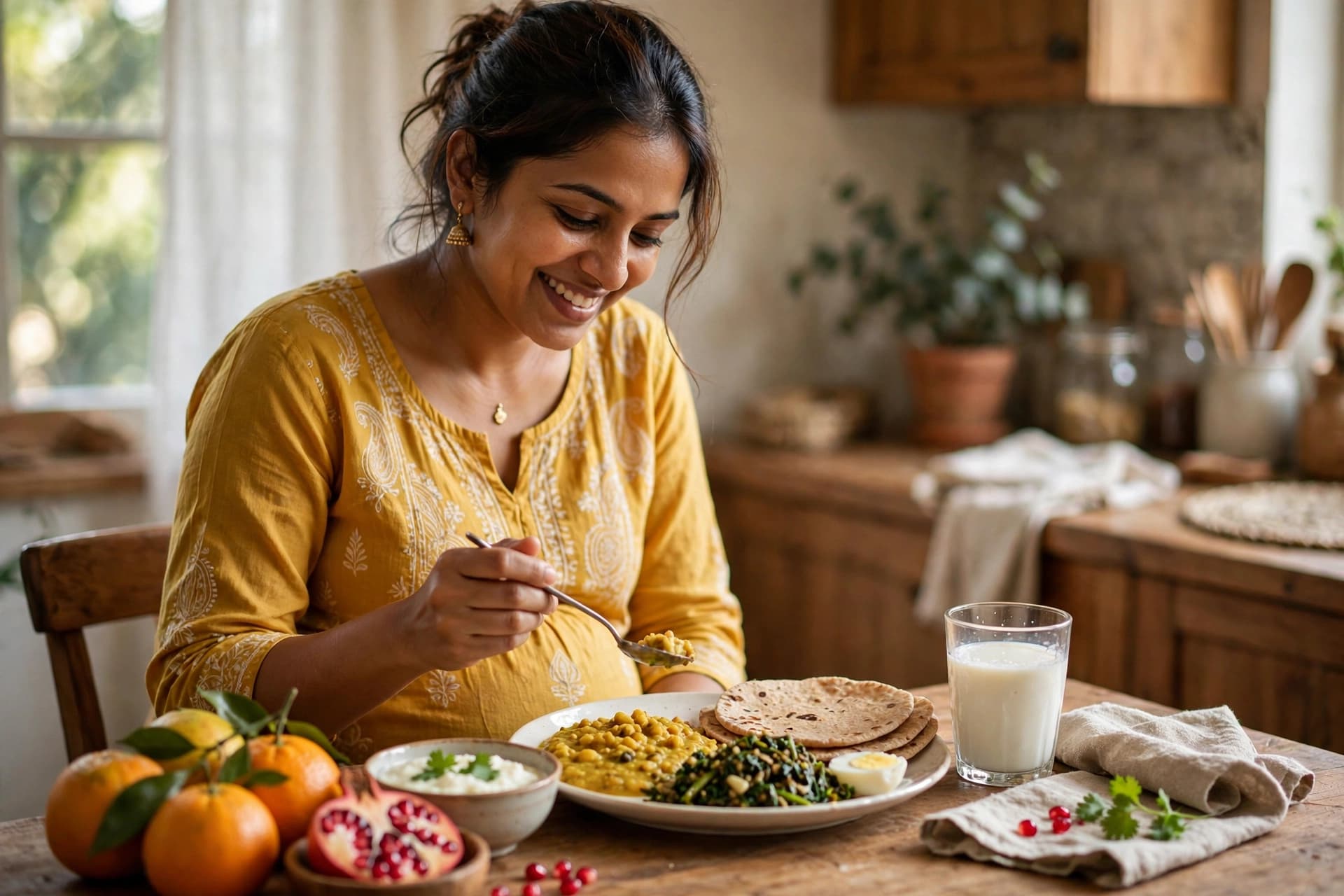
- A protein source – Dal, beans, paneer, curd, eggs, fish, chicken or tofu.
- A whole-grain or other carbohydrate source – Roti, brown rice, oats, millets or other whole grains.
- Vegetables and fruit – Include different colours and varieties throughout the day.
- A source of healthy fats – Nuts, seeds and appropriate cooking oils in moderate amounts.
And, of course, adequate fluids should be part of your daily routine.
This approach is more sustainable than focusing on individual "pregnancy superfoods."
Do You Need Pregnancy Supplements?
Sometimes, yes.
Even with a healthy diet, certain nutrients may be difficult to obtain in sufficient amounts during pregnancy. Your doctor may recommend supplements such as folic acid, iron, calcium or vitamin D based on your stage of pregnancy, diet, blood tests and individual health needs.
WHO recommends iron and folic acid supplementation during pregnancy, while other supplementation decisions may depend on the individual's nutritional status and local clinical guidance.
Do not start multiple supplements on your own. Some vitamins and minerals can be harmful in excessive amounts, and the correct dose depends on your individual circumstances.
Common Nutrition Mistakes During Pregnancy
Even women who are trying to eat healthy can make a few common mistakes.
Eating for two
Pregnancy does not mean you need to double your food intake. Nutritional needs increase, but the focus should remain on nutrient quality and appropriate portions.
Depending heavily on packaged foods
Convenience foods can be high in salt, sugar or unhealthy fats while providing fewer essential nutrients.
Skipping meals because of nausea
If large meals are difficult, smaller and more frequent meals may be easier to tolerate.
Taking supplements without medical advice
More supplements do not automatically mean better nutrition. Always check with your doctor before adding a new supplement.
Following restrictive diets
Pregnancy is generally not the time for unnecessary calorie restriction or fad diets. Any special diet should be discussed with a healthcare professional.
Nutrition Needs Can Vary From One Pregnancy to Another
There is no single pregnancy diet that works perfectly for every woman.
Your nutritional requirements may be different if you have:
- Anaemia
- Diabetes or gestational diabetes
- Thyroid problems
- Severe nausea or vomiting
- Food allergies or intolerances
- A vegetarian or vegan diet
- Multiple pregnancy
- A history of nutritional deficiencies
This is why your diet and supplements should be personalised when necessary rather than copied from someone else's pregnancy meal plan.
Frequently Asked Questions
What are the most important nutrients during pregnancy?
Folic acid, iron, calcium, vitamin D, protein, iodine and omega-3 fatty acids are among the important nutrients during pregnancy. A varied diet also helps provide other vitamins and minerals needed for maternal and fetal health.
Can I get all my pregnancy nutrients from food?
A balanced diet can provide many essential nutrients, but some supplements may still be recommended during pregnancy. Your doctor can determine what you need based on your diet, health and test results.
Why is folic acid important during pregnancy?
Folic acid is particularly important during early pregnancy because it supports neural tube development. Supplementation is commonly recommended as part of pregnancy care.
Which foods are good sources of iron during pregnancy?
Dals, beans, chickpeas, leafy vegetables, eggs, meat and iron-fortified foods can contribute to iron intake. Combining plant-based iron sources with vitamin C-rich foods can improve absorption.
Is protein important during pregnancy?
Yes. Protein provides amino acids needed for the growth and development of the baby and supports changes in the mother's body during pregnancy.
Should I take pregnancy supplements without consulting a doctor?
No. Supplements should be selected and dosed according to your individual needs. Taking unnecessary or excessive amounts of certain nutrients can be harmful.
How can I eat well if I have morning sickness?
Try smaller meals more frequently and choose foods that you can tolerate. Keeping hydrated is also important. If vomiting is severe or you cannot keep fluids down, speak with your healthcare provider.
Final Thoughts
Good nutrition during pregnancy is not about perfection or following a single strict plan. It is about getting a varied mix of foods that supply the key nutrients your body and your baby need at each stage. Folic acid, iron, calcium, vitamin D, protein, iodine and omega-3 fatty acids all play important roles, alongside a balanced overall diet.
If you are unsure about your diet or supplement needs during pregnancy, speak with your doctor or a qualified dietitian for guidance suited to your individual health and stage of pregnancy.