Dr. Manish Sharma
Published on December 26, 2025
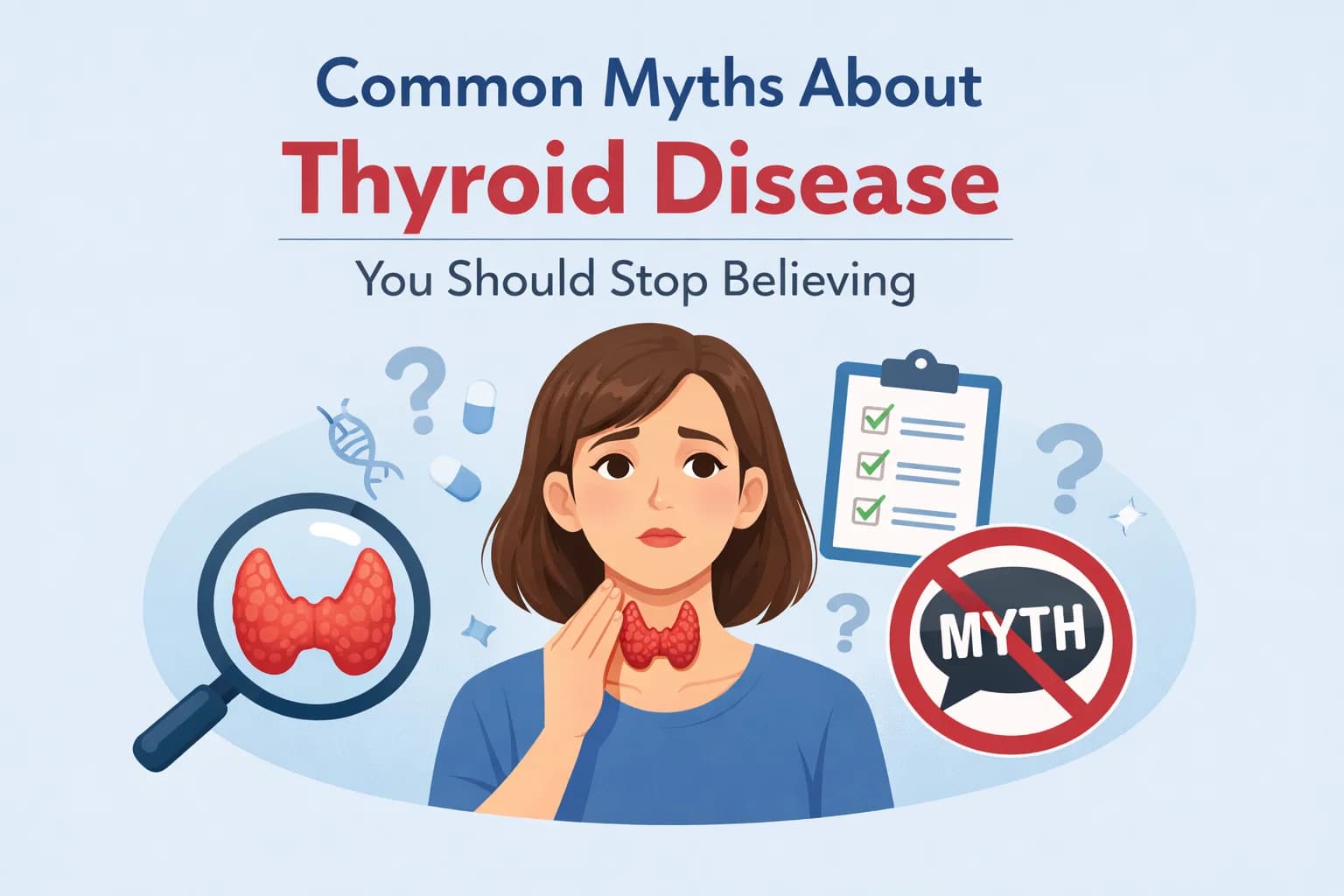
Thyroid Truths vs. Myths: Separating Facts from Fiction in Thyroid Health
Don't Believe Everything You Hear About Thyroid: A Doctor's Guide to the Truth
As a General Physician specializing in thyroid disorders in Ajmer, I meet patients every day who are confused by the misinformation circulating about thyroid disease. From WhatsApp forwards to well-meaning but misinformed advice from relatives, thyroid health is surrounded by myths that can prevent proper treatment. In this article, I'll address the most common misconceptions I encounter in my practice and give you the medical facts you need for better thyroid health.
Why Thyroid Myths Are Dangerous
The thyroid is a small butterfly-shaped gland in your neck that controls your metabolism, energy levels, and much more. Believing myths about thyroid disease can lead to delayed diagnosis, incorrect treatment, unnecessary worry, and sometimes even dangerous practices. Through my work at Paras Hospital and Jeevan Jyoti Hospital in Ajmer, I've seen how clearing these misconceptions helps patients achieve better health outcomes. Let's separate fact from fiction.
Top 10 Thyroid Myths Debunked
Myth 1: "Thyroid Problems Only Affect Women"
The Truth: While thyroid disorders are more common in women (5-8 times more likely), men are certainly not immune. In my Ajmer practice, I treat a significant number of male patients for thyroid conditions. Men can develop hypothyroidism, hyperthyroidism, and thyroid cancer. Ignoring symptoms because "it's a women's disease" can lead to serious complications in men, including heart problems, depression, and sexual dysfunction.
Myth 2: "Thyroid Medication Causes Weight Gain"
The Truth: This is perhaps the most harmful myth. Thyroid medication (levothyroxine) replaces what your body isn't making enough of. Correctly dosed medication does not cause weight gain—it helps regulate your metabolism. Untreated hypothyroidism actually causes weight gain due to slowed metabolism. Proper treatment can help you return to your normal weight. If you're gaining weight on medication, the dose may need adjustment, or other factors like diet and lifestyle need addressing.
Myth 3: "If Your TSH is Normal, You Don't Have a Thyroid Problem"
The Truth: While TSH (Thyroid Stimulating Hormone) is the primary screening test, it doesn't give the complete picture. Some patients have normal TSH but still experience symptoms because their T3 or T4 levels are off. Others may have autoimmune thyroid disease (like Hashimoto's) with normal TSH initially. A complete thyroid panel and clinical evaluation by a doctor are necessary for accurate diagnosis. I've diagnosed many patients in Ajmer whose symptoms were dismissed because of "normal TSH" elsewhere.
Myth 4: "Once You Start Thyroid Medicine, You're On It for Life"
The Truth: This is partially true but needs clarification. For most cases of primary hypothyroidism (especially autoimmune types like Hashimoto's), lifelong medication is usually necessary because the thyroid gland cannot heal itself. However, some conditions like subacute thyroiditis (often after viral infection) or postpartum thyroiditis may be temporary, requiring medication for only a few months. Only your doctor can determine what's right for your specific condition after proper evaluation.
Myth 5: "Natural/Herbal Remedies Can Cure Thyroid Disease"
The Truth: While certain supplements (like selenium, zinc, vitamin D) and lifestyle changes can support thyroid function and overall health, there is no scientific evidence that any herb, supplement, or alternative treatment can cure autoimmune thyroid disease or restore a damaged thyroid gland. Relying solely on these can allow your condition to worsen. Evidence-based medicine combined with healthy lifestyle practices provides the best outcomes.
Myth 6: "A Special 'Thyroid Diet' Can Replace Medication"
The Truth: No specific diet can replace thyroid medication if you have hypothyroidism. However, certain dietary practices can help:
- Eating balanced meals at regular intervals
- Ensuring adequate iodine (but not excess) through iodized salt
- Avoiding excessive raw goitrogenic vegetables (like cabbage, cauliflower) if you have iodine deficiency
- Limiting processed foods and sugar
Our clinic's Clinical Dietician, Dt. Gauri Mehra works with thyroid patients to create supportive meal plans, but these complement medication, never replace it.
Myth 7: "Thyroid Problems Always Cause Weight Gain"
The Truth: Hypothyroidism (underactive thyroid) often causes weight gain, but hyperthyroidism (overactive thyroid) typically causes weight loss. Additionally, not everyone with hypothyroidism gains significant weight—some only gain 5-10 pounds, while others struggle more. Weight changes depend on the severity of the condition, duration before treatment, and individual metabolism.
Myth 8: "Thyroid Disorders Are Just About Weight and Energy"
The Truth: Thyroid hormones affect nearly every organ system. Beyond weight and energy, thyroid problems can cause:
- Heart palpitations or slow heart rate
- Hair loss and skin changes
- Mood disorders like depression or anxiety
- Memory and concentration problems
- Menstrual irregularities and fertility issues
- Muscle aches and joint pain
- Cholesterol abnormalities
This is why comprehensive evaluation and treatment are crucial.
Myth 9: "You Can Stop Medication Once You Feel Better"
The Truth: Feeling better means the medication is working, not that you're cured. Stopping medication will cause your symptoms to return, often gradually, and can put you at risk for serious complications like myxedema (a life-threatening condition of severe hypothyroidism), heart problems, and worsening cholesterol levels.
Myth 10: "All Thyroid Nodules Mean Cancer"
The Truth: Thyroid nodules are very common—up to 50% of people may have them by age 60. The vast majority (over 90%) are benign. While evaluation is important (through ultrasound and possibly biopsy), most nodules simply require monitoring. Only about 5-10% of nodules are cancerous, and most thyroid cancers are highly treatable with excellent outcomes.
Patient Stories: Breaking Free from Myths
"For years, my mother told me not to take thyroid medicine because it would make me fat. I suffered with fatigue, hair loss, and depression. When I finally consulted Dr. Sharma, he explained the truth. On proper medication, I actually lost the extra weight I'd gained from my untreated thyroid and got my energy back." - Meena K., 32, Ajmer
"I wasted two years and a lot of money on various 'natural thyroid cures' I found online. My symptoms only worsened. Dr. Sharma put me on proper treatment and within months, my brain fog lifted and my constant chill disappeared. I wish I had come to a real doctor sooner." - Rajeev S., 45, Ajmer
The Facts: What Thyroid Treatment Really Involves
- Accurate Diagnosis: Through blood tests (TSH, Free T4, Free T3, antibodies) and sometimes ultrasound.
- Personalized Medication: The right dose of thyroid hormone replacement, adjusted based on regular blood tests and symptoms.
- Regular Monitoring: Thyroid levels need checking every 6-12 months once stable, or more frequently during dose adjustments.
- Holistic Support: Including stress management, balanced nutrition, adequate sleep, and regular exercise. Explore our preventive health approaches.
- Managing Related Conditions: Addressing commonly associated issues like vitamin deficiencies, cholesterol problems, or mood disorders.
When to Consult a Thyroid Specialist in Ajmer
You should schedule a consultation if you experience:
- Unexplained fatigue that doesn't improve with rest
- Unexpected weight changes
- Hair thinning or loss
- Feeling unusually cold or hot
- Mood swings, anxiety, or depression
- Palpitations or irregular heartbeat
- Swelling in the neck area
- Family history of thyroid disease
Frequently Asked Questions
Q: Can thyroid disease be prevented?
A: Autoimmune thyroid diseases cannot be completely prevented, but maintaining a healthy lifestyle, managing stress, avoiding smoking, and ensuring adequate (not excessive) iodine intake can support thyroid health.
Q: Is thyroid disease hereditary?
A: There is a genetic component, especially for autoimmune forms like Hashimoto's thyroiditis and Graves' disease. If a close relative has thyroid disease, you should be more vigilant about symptoms and consider screening.
Q: What time of day should I take thyroid medication?
A: Ideally first thing in the morning, on an empty stomach, with water only. Wait at least 30-60 minutes before eating or drinking anything else (except water), and avoid taking it with calcium or iron supplements.
Q: Can thyroid problems affect pregnancy?
A: Yes, significantly. Both hypothyroidism and hyperthyroidism can affect fertility, pregnancy, and fetal development. Proper treatment and monitoring are crucial for women planning pregnancy or who are pregnant.
The Bottom Line: Trust Science, Not Myths
Thyroid disease is manageable with proper medical care. Don't let misinformation delay your diagnosis or treatment. If you're in Ajmer and concerned about thyroid health, get evaluated properly rather than relying on hearsay.
As a physician with extensive experience treating thyroid disorders, I provide evidence-based care tailored to each patient's unique needs. My approach combines accurate diagnosis, careful medication management, regular monitoring, and lifestyle guidance for comprehensive thyroid health.
📞 For a Thyroid Evaluation in Ajmer: Call +91 8690761918 to book your consultation.
📍 Available at: Paras Hospital, Pushkar Road (10 AM-5 PM) and Jeevan Jyoti Hospital, Beawar Road (6 PM-8 PM by appointment).
Your thyroid health is too important to be guided by myths. Get the facts, get proper treatment, and take control of your well-being.